TOEFL Gratis FMIPA UAD

Test of English as a Foreign Language atau biasa disingkat TOEFL adalah ujian kemampuan berbahasa Inggris yang menjadi salah satu syarat untuk mencapai gelar sarjana. Pada Sabtu (11/6/2016) di ruang 3.1.206 kampus III Universitas Ahmad Dahlan (UAD), dilaksanakan tes tersebut.

Sebanyak 120 mahasiswa Fakultas Matematika dan Ilmu Pengetahuan Alam (FMIPA) mengikuti tes simulasi TOEFL yang diselenggarakan oleh Departemen Ilmu Pengetahuan dan Teknologi (IPTEK) Badan Eksekutif Mahasiswa (BEM) FMIPA, yang sekaligus bekerja sama dengan Swift English School. Tes tersebut dilaksanakan secara gratis.

“Tes ini diselenggarakan untuk membantu mahasiswa FMIPA agar mengetahui seberapa kemampuan bahasa Inggris yang dimiliki, karena syarat nilai TOEFL untuk kelulusan di FMIPA adalah 450. Jadi, semoga dengan diadakannya tes ini, dapat membantu mahasiswa untuk ke depannya,” ungkap Anggi Surya Permana selaku Ketua Panitia TOEFL dalam sambutannya.

Gubernur FMIPA, Ferry Riano Setyawan, juga berujar, “Terima kasih kepada semua peserta yang antusias berpartisipasi dalam acara ini.”

Simulasi TOEFL dibagi menjadi dua sesi. Sesi pertama dimulai pukul 12.30–15.00, dan sesi kedua dimulai pukul 15.30–17.00 WIB yang dipimpin secara langsung oleh pihak Swift English School.

Terdapat 3 section yang harus dikerjakan oleh peserta yaitu section 1 listening yang berisi 40 soal, section 2 reading sejumlah 50 soal, dan section 3 structure berisi 50 soal.

Hasil tes tersebut akan diumumkan dua minggu setelah pelaksanaan, dan apabila ada peserta yang ingin mencetak sertifikat hasil tes, pihak Swift English School siap untuk melayani. (TF/AKN)

FMIPA UAD Carried Out Free TOEFL Test

Test of English as a Foreign Language (TOEFL), an English proficiency test for students to obtain under graduate degree was carried out on Saturday (11/6/2016) in room 3.1.206, campus III, Ahmad Dahlan University (UAD).

There were 120 students of Faculty of Math and Science (FMIPA) participating in the TOEFL simulation test carried out by departement of science and technology (IPTEK), Student Executive Board (BEM) of FMIPA in colaboration with Swift English School. The test was free.

“This test is aimed to know the level of FMIPA students’ English proviciency for they should meet the TOEFL score of 450, the FMIPA graduation requirement of TOEFL score. By doing so, hopefully it will be helpfull for the students’ future.”, said Anggi Surya Permana, the head of TOEFL committee in her opening speech.

The governor of BEM FMIPA, Ferry Riano Setyawan said “thank you for all participants who are enthusiatic taking apart in this program”.

The TOEFL simulation test was devided into two sesións. The first sesión had started at 12.30 – 15.00 while the second one had started at 15.30 – 17.00 at local time. Each sesión was run by the staff of Swift English School.

There were three sections of the test that should be completed by the participants. They were section 1 consisting 40 questions of listening test, section 2 consisting 50 questions of Reading test, and section 3 consisting 50 questions of structure test.

The result of the test would be announced in two weeks after the test. While the certificate was provided by Swift English School for those who asked for it. (TF/AKN)


The Achievement of Students of Accountancy Department, Faculty of Economics UAD Lead Them To Follow SUT International Camp 2016


Two students of Accountancy Department, Faculty of Economics University of Ahmad Dahlan (FE UAD), Rachmat Bagus W and Raja Yulianita Sarazwati left for Thailand  representing their institution to follow SUT International Camp 2016  held at Suranaree University of Technology (SUT) Thailand.

The activity covers two sessions i.e. The 3rd International ASEAN Culture Camp: ISAAN Culture Camp and The 2nd International Martial-Arts and Culture Camp: Muay Thai Camp.

‘It is the achievement that leads them to join in the programs. They are students with good achievement at faculty level last year. Rachmat and Raja are the first and second champions at FE UAD in 2015 student achievement championship, said Rikha Muftia Khoirunisa, SE., M.Sc. public relation of FE.

Rachmat got the chance to join in Muay Thai camp because most of the agenda in the camp were martial arts. The material presented were Muay Thai rituals, defense attack techniques, wai–kru ceremony, and group presentation for everything learned in the camp. Moreover the camp exhibited Pimai Histrical Park and Suranaree Army Camp.

Meanwhile, Raja attended ISAAN Culture Camp. The agenda include conferences, lectures, recreational games, voluntary activities, ASEAN cultural exchange, Thai arts and culture study, and field trips. ISAAN culture camp is carried out to improve awareness of ASEAN community and to give a chance for knowledge, culture exchange and improve brotherhood in every activity.

The event takes place from 19-25/06/2016 and will be closed by a farewell party at the end. UAD team will present a collaboration dance entitled The Beauty of Equator. The dance is a medley of all sorts of Indonesian dance.

‘The International Camp is followed by some countries in ASEAN, so that it becomes a challenge for the members to adapt with the neighboring countries in culture. Moreover, it is a medium to build international relation  among them,’ said Ida Puspita, M.A. Res as chief of International relation office (KUI).


Prestasi Antarkan Mahasiswa Akuntansi FE UAD Ikuti SUT International Camp 2016

Dua mahasiswa Program Studi Akuntansi Fakultas Ekonomi Universitas Ahmad Dahlan (FE-UAD), Rachmat Bagus W dan Raja Yulianita Sarazwati berangkat ke Thailand mewakili kampus untuk mengikuti SUT International Camp 2016 yang diadakan oleh Suranaree University of Technology (SUT), Thailand.

Kegiatan camp terbagi atas dua bagian, yaitu The 3rd International ASEAN Culture Camp: ISAAN Culture Camp serta The 2nd International Martial-Arts dan Culture Camp: Muay Thai Camp.

“Prestasilah yang mengantarkan mereka ke sana. Mereka mahasiswa berprestasi tingkat fakultas tahun 2015 lalu, Rachmat meraih juara I dan Raja juara II pemilihan mahasiswa berprestasi FE UAD 2015,” terang Rikha Muftia Khoirunnisa, S.E.,. M.Sc. humas FE.

Rachmat mendapatkan kesempatan untuk bergabung dalam Muay Thai camp karena sebagian besar agenda dalam camp ini adalah seni bela diri. Materi yang diberikan antara lain ritual Muay Thai, teknik bertahan dan menyerang, wai-kru ceremony, dan group presentation untuk mendemonstrasikan yang telah dipelajari selama camp. Selain itu, dalam camp ini akan diperlihatkan berbagai tempat menarik seperti Pimai Historical Park dan Suranaree Army Camp.

Sementara itu, Raja akan mengikuti ISAAN Culture Camp. Kegiatan yang akan dilakukan meliputi conferences, lectures, recreational games, voluntary activities, ASEAN cultural  exchange, Thai arts and culture study, and field trips. ISAAN culture camp diadakan untuk meningkatkan kesadaran akan pentingnya masyarakat ASEAN dan untuk memberikan kesempatan dalam pertukaran ilmu pengetahuan, budaya, serta menjalin persahabatan melalui setiap kegiatan yang dilaksanakan.

Kegiatan yang berlangsung (19-25/6/2016) tersebut akan diadakan farewell party di penghujung acara. Tim UAD akan menampilkan sebuah pertunjukan tari kolaborasi yang berjudul pesona khatulistiwa. Tarian tersebut merupakan medley terhadap beberapa tarian daerah yang ada di Indonesia.

“International camp ini diikuti dari berbagai negara di ASEAN, sehingga menjadikan tantangan tersendiri untuk dapat beradaptasi dengan teman-teman dari berbagai negara, mengenal kebudayaan yang ada di negara Thailand, serta negara ASEAN lainnya. Selain itu juga sebagai media membangun relasi international antar sesama mahasiswa,” kata Ida Puspita, M.A.Res. selaku Kepala Urusan Internasional (KUI).

Politik di Muhammadiyah Sangat Minim

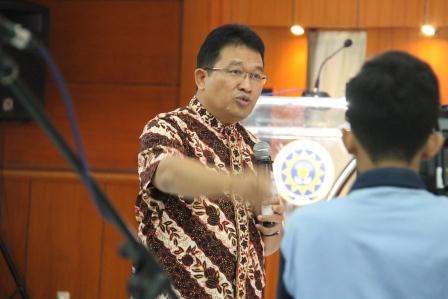
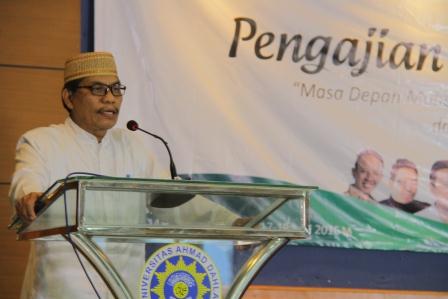
“Politik di Muhammadiyah sangat minim, tetapi bukan berarti tidak ada yang merespons. Sesungguhnya, politik adalah hal yang penting untuk berdakwah karena dapat melawan pemimpin yang zhalim,” ucap Dr. Kasiyarno, M.Hum. di ruangannya sebelum memberikan sambutan kepada audiens pengajian Ramadhan Majelis Pendidikan Kader Pimpinan Wilayah Muhammadiyah Daerah Istimewa Yogyakarta (MPK PWM-DIY) Jum’at (17/6/2016).

Pengajian yang mengangkat tema “Masa Depan Muhammadiyah: Penguatan Peran Sosial Politik dan Kemandirian Ekonomi” ini diharapkan, memunculkan banyak kader Muhammadiyah yang siap me-reset menatap jalan lurus sebagai politisi dan saudagar dalam berbagai bidang.

Dengan tema dan narasumber yang berkompeten di bidangnya, dipastikan akan ada adanya tindak lanjut kegiatan praksi sebagai wujud gerakan dakwah Muhammadiyah di DIY.

“Kami berharap, kultur Parpol yang kurang baik, dapat direformasi untuk lebih baik,” kata Drs. Untung Cahyono, M.Hum., Wakil Ketua PWM DIY sekaligus Koordinator Bidang Kader Hukum dan Ham.

About Politic, Muhammadiyah Takes The Least Role.

‘Muhammadiyah takes the least role. It does not mean that there is no Muhammadiyah members who respond it. Actually, politic plays an important role in proselytizing because it can be used to resist against a tyrannical rules,’ said Dr. Kasiyarno, M.Hum at his office before delivering a speech at Ramadhan proselytizing held by Council of Cadres, Boards of Regional Leaders Chapter Yogyakarta Special Province last Friday (17/06/2016)           

The proselytizing with the theme ‘Muhammadiyah’s Future: Strnghthening Social and Political Role and Econmical Independence’ is expected to lead young Muhammadiyah leaders ready to run good governance politicians and tycoons.

With the theme and competence speakers at their fields, it will lead to a further activity in the form of real Muhammadiyah proselytizing in Yogyakarta.

‘We hope, the bad image of political parties can be changed for a better one,’ said Drs. Untung Cahyono, M.Hum., Vice Chief of PWM DIY and Coordinator of Cadre Section Law and Human Rights.

The Role of Religious Leaders in Sustainable Development

‘Religion is a guide for life, so that religion must enlighten life.’

‘Through Al-Anfaal surah, Drs. Suyoto, M.Si. opened a Ramadhan Proselytizing held by Council of Educating Cadre, Board of Muhammadiyah Chiefs Chapter Yogyakarta Spial Province (MPK PWM DIY) last Saturday (18/06/2016) with the theme ‘The Role of Religious Leaders in Sustainable Devevopment.’

The regent of Bojonegoro who is also called Kang Yoto said, ‘To survive, what do you offer? What do you do to be successful? These are questions to be developed,’ he insisted.

One of the answers to the questions is to understand historical contexts to decide what to do. Religious leaders should do the same. According to him, religious leaders are spiritual leaders, who should serve the community to improve their welfare. Their role here is to build global brotherhood involving all sectors either governmental or societal. Religious leaders are obliged to give positive perspective and ethics. Ethics and religion help solve problems in society. They associate human thoughts and deeds, which religious leaders can synchronize.

Peran Agamawan dalam Pembangunan Berkelanjutan

“Agama itu petunjuk hidup, maka beragama harus menghidupkan.”

Melalui surat al-Anfaal, Drs. Suyoto, M.Si. membuka pengajian Ramadhan Majelis Pendidikan Kader Pimpinan Wilayah Muhammadiyah Daerah Istimewa Yogyakarta (MPK PWM-DIY) Sabtu (18/6/2016) di auditorium Universitas Ahmad Dahlan (UAD) dengan tema “Peran Agamawan dalam Pembangunan Berkelanjutan”.

Bupati Bojonegoro yang akrab dipanggil Kang Yoto ini mengatakan, “Untuk menghidupkan, lantas apa yang akan Anda jual? Bagaimana Anda menjual dan sukses? Ini pertanyaan penting untuk maju,” tengasnya.

Salah satu untuk menjawab pertanyaan itu adalah, pahami konteks sejarah untuk menentukan apa yang akan dijual. Agamawan juga harus seperti itu.

Menurutnya, agamawan adalah pemimpin spiritual, pemimpin yang melayani masyarakat untuk meningkatkan kesejahteraan semua masyarakat. Peran agamawan di sini adalah menjalin kemitraan global antara semua sektor, baik pemerintah maupun masyarakat. Kalangan agamawan dituntut memberi perspektif etika. Etika dapat membantu agama dalam memecahkan masalah yang sulit dijawab oleh agama. Hal tersebut bisa menghubungkan dengan akal, budi, pikiran manusia, sehingga di sinilah peran agamawan untuk mensinkronkan.


Uji Klinik Obat Herbal


Indonesia merupakan negara yang kaya raya dengan potensi sumber daya alam hayati, termasuk tanaman obat. Sebagai negara yang terbentang di daerah tropis dalam hal kepemilikan keanekaragaman hayati tumbuhan obat Indonesia merupakan negara terbesar kedua di dunia, setelah negara Brasil. Sudah sejak lama para leluhur bangsa Indonesia memanfaatkan tanaman obat sebagai sarana untuk menjaga kesehatan dan mencegah penyakit.  Salah satu bentuk obat herbal adalah jamu.

Apakah uji klinik itu?

Uji klinik atau clinical trial adalah penelitian yang dilakukan pada subjek manusia. Umumnya, uji klinis dilakukan pada pasien. Uji klinik atau penelitian eksperimental klinis dibedakan menjadi empat fase, yaitu penelitian klinis fase I, fase II, fase III, dan fase IV.

Jenis penelitian klinis berdasarkan fasenya disajikan pada tabel berikut.

Tabel 1. Fase trial klinik dan karakteristiknya (Bennet & Brown, 2008)

Jenis trial klinik

Tujuan

Metodologi & desain

Fase nol

Penjajakan awal pada manusia untuk senyawa atau agent baru.

Kuasi atau eksperimental historis (pre-post design).

Fase I

Farmakologi  klinik. Dosis aman, tolerabilitas dan profile farmakokinetika, farmakodinamik obat serta pengaruh makanan.

20-80, subjek relawan sehat atau pasien sesuai klas terapi,  trial klinik kuasi atau historic (pre-post study).

Fase II

Eksplorasi efek terapi. Dosis efektif dan rentang dosis aman , keamanan terutama untuk prediksi AE dan profil farmakokinetika, data mekanisme patofisiologi tambahan. Sebelum obat diedarkan.pact of new therapy

30-300, subjek pasien dengan jumlah kecil; open label clinical trial.

Fase III

Konfirmasi efek terapi. Uji efikasi, farmakoekonomi dan keamanan pada jumlah sampel yang cukup dan representative. Sebelum obat mendapatkan izin edar.

250-1000, subjek pasien sesuai dengan criteria inklusi dengan jumlah cukup-besar; RCT parallel atau cross over. 

Fase IV/post marketing surveilans

Evaluasi efek terapi. Pemantauan ADR, tingkat keamanan dan efek/indikasi lain  setelah obat diedarkan.

2000-10.000, subjek: pasien sakit; observasional analitik atau case series.


Uji klinik obat herbal adalah pengujian obat herbal pada manusia. Umumnya uji klinik obat dilakukan setelah bakal calon obat sudah menjalani uji praklinik, yang biasanya dilakukan pada hewan uji. Hanya saja untuk uji klinik obat herbal ada dua pendekatan yaitu pendekatan obat herbal sebagai jamu dan obat herbal non-jamu. Pada obat herbal jamu uji klinik bisa dilakukan meskipun tidak melalui uji praklinik. Namun, untuk obat herbal non-prosedur untuk sampai ke uji klinik—sebagaimana pengujian calon obat  pada umumnya, yaitu melalui uji praklinik, uji klinik fase 1, fase 2 , fase 3, dan fase 4.

Uji klinik dilakukan untuk memberikan jaminan kepastian manfaat dan keamanan suatu obat atau obat herbal. Tidak semua obat herbal bebas risiko efek samping sehingga uji klinik ini perlu dilakukan untuk obat herbal demi menghindari adanya bahaya bagi masyarakat. Hanya saja uji klinik membutuhkan sumber daya dan dana yang tidak sedikit.

Universitas Ahmad Dahlan (UAD), Fakultas Farmasi, dengan memanfaatkan dana dari pemerintah juga sudah melakukan uji klinik untuk obat herbal berbahan bunga rosela, tongkat ali, dan jinten hitam.

 Clinical Trial for Herbal Medicine

Indonesia is rich with natural resources potentials including herbal medicine. As a tropical country, Indonesia is the second largest country to produce herbal medicine after Brazil. It has been a long time that our ancestors make use of herbal medicines to maintain their health and cure diseases. One of the form is called jamu.

What is a clinical test?

A clinical trial is a research that is addressed to man as a subject. Generally, this is done to a patient. The clinical trial or also called an experimental research is classified into four phases. i.e. phase I, phase II, phase III, and phase IV. The four phases of clinical trial can be seen in the following table.

Tabel 1. Clinical Trial Phases and Their Characteristics (Bennet & Brown, 2008)

Types of Clinical Trial

Purpose

Methods & Design

Zero Phase

Preliminary study on man about chemical compound and new agent.

Quasi or historical experiment (pre-post design).

Phase I

Clinical Pharmacology. Safe dosage, tolerability and pharmacokinetic profile, medical pharmacodynamics and food effect.

20-80, healthy volunteer subject or patient suitable therapeutic class, historical or quasi trial clinic (pre-post study).

Phase II

Therapeutic effect exploration. Effective dosage and safe dosage range, safety especially to predict AE and pharmacokinetic profile, additional pathophysiology mechanism data, before release of medicine. Pact of new therapy

30-300, little number of patient subject; open label clinical trial.

Phase III

Confirmation of therapeutic effect. Eviction, pharmaco-economy, and safety trial on enough sample and representative before medicine gets legal permit for distribution.

250-1000, suitable patient subject with inclusion criteria with big number; RCT parallel or cross over. 

Phase IV/post marketing surveillance

Therapeutic effect evaluation. ADR, safety  level, and other effect/indication monitoring after medicine distribution

2000-10.000, subject: sick patient; analytical observation or case series.

Herbal medicine-clinical trial is a herbal medicine examination on man. Generally a clinical trial is done after desired prepared medicine undergoes pre-clinical trial, which is applied on animals. Yet, herbal medicine-clinical trial can undergo two approaches i.e. the trial as jamu and non-jamu. For herbal medicine as jamu, the clinical trial can be done without pre-clinical trial. But, for herbal medicine non-jamu to come to clinical trial, it follows the normal procedure i.e. from pre-clinical trial up to clinical trial phase 4.

Clinical trial is done to guarantee the medicine’s advantages as well as safety. Not all herbal medicines are free from side effects so that clinical trial is needed to avoid the danger for public. Nevertheless, clinical trial requires human resources and much fund.

University of Ahmad Dahlan (UAD) through its Pharmacy Faculty made use of government grant to carry out clinical trial for herbal medicine composed of rosela, tonglat ali, and black jinten.
 

Clinical Trial for Herbal Medicine


Indonesia is rich with natural resources potentials including herbal medicine. As a tropical country, Indonesia is the second largest country to produce herbal medicine after Brazil. It has been a long time that our ancestors make use of herbal medicines to maintain their health and cure diseases. One of the form is called jamu.

What is a clinical test?

A clinical trial is a research that is addressed to man as a subject. Generally, this is done to a patient. The clinical trial or also called an experimental research is classified into four phases. i.e. phase I, phase II, phase III, and phase IV. The four phases of clinical trial can be seen in the following table.

Tabel 1. Clinical Trial Phases and Their Characteristics (Bennet & Brown, 2008)

Types of Clinical Trial

Purpose

Methods & Design

Zero Phase

Preliminary study on man about chemical compound and new agent.

Quasi or historical experiment (pre-post design).

Phase I

Clinical Pharmacology. Safe dosage, tolerability and pharmacokinetic profile, medical pharmacodynamics and food effect.

20-80, healthy volunteer subject or patient suitable therapeutic class, historical or quasi trial clinic (pre-post study).

Phase II

Therapeutic effect exploration. Effective dosage and safe dosage range, safety especially to predict AE and pharmacokinetic profile, additional pathophysiology mechanism data, before release of medicine. Pact of new therapy

30-300, little number of patient subject; open label clinical trial.

Phase III

Confirmation of therapeutic effect. Eviction, pharmaco-economy, and safety trial on enough sample and representative before medicine gets legal permit for distribution.

250-1000, suitable patient subject with inclusion criteria with big number; RCT parallel or cross over. 

Phase IV/post marketing surveillance

Therapeutic effect evaluation. ADR, safety  level, and other effect/indication monitoring after medicine distribution

2000-10.000, subject: sick patient; analytical observation or case series.

Herbal medicine-clinical trial is a herbal medicine examination on man. Generally a clinical trial is done after desired prepared medicine undergoes pre-clinical trial, which is applied on animals. Yet, herbal medicine-clinical trial can undergo two approaches i.e. the trial as jamu and non-jamu. For herbal medicine as jamu, the clinical trial can be done without pre-clinical trial. But, for herbal medicine non-jamu to come to clinical trial, it follows the normal procedure i.e. from pre-clinical trial up to clinical trial phase 4.

Clinical trial is done to guarantee the medicine’s advantages as well as safety. Not all herbal medicines are free from side effects so that clinical trial is needed to avoid the danger for public. Nevertheless, clinical trial requires human resources and much fund.

University of Ahmad Dahlan (UAD) through its Pharmacy Faculty made use of government grant to carry out clinical trial for herbal medicine composed of rosela, tonglat ali, and black jinten.